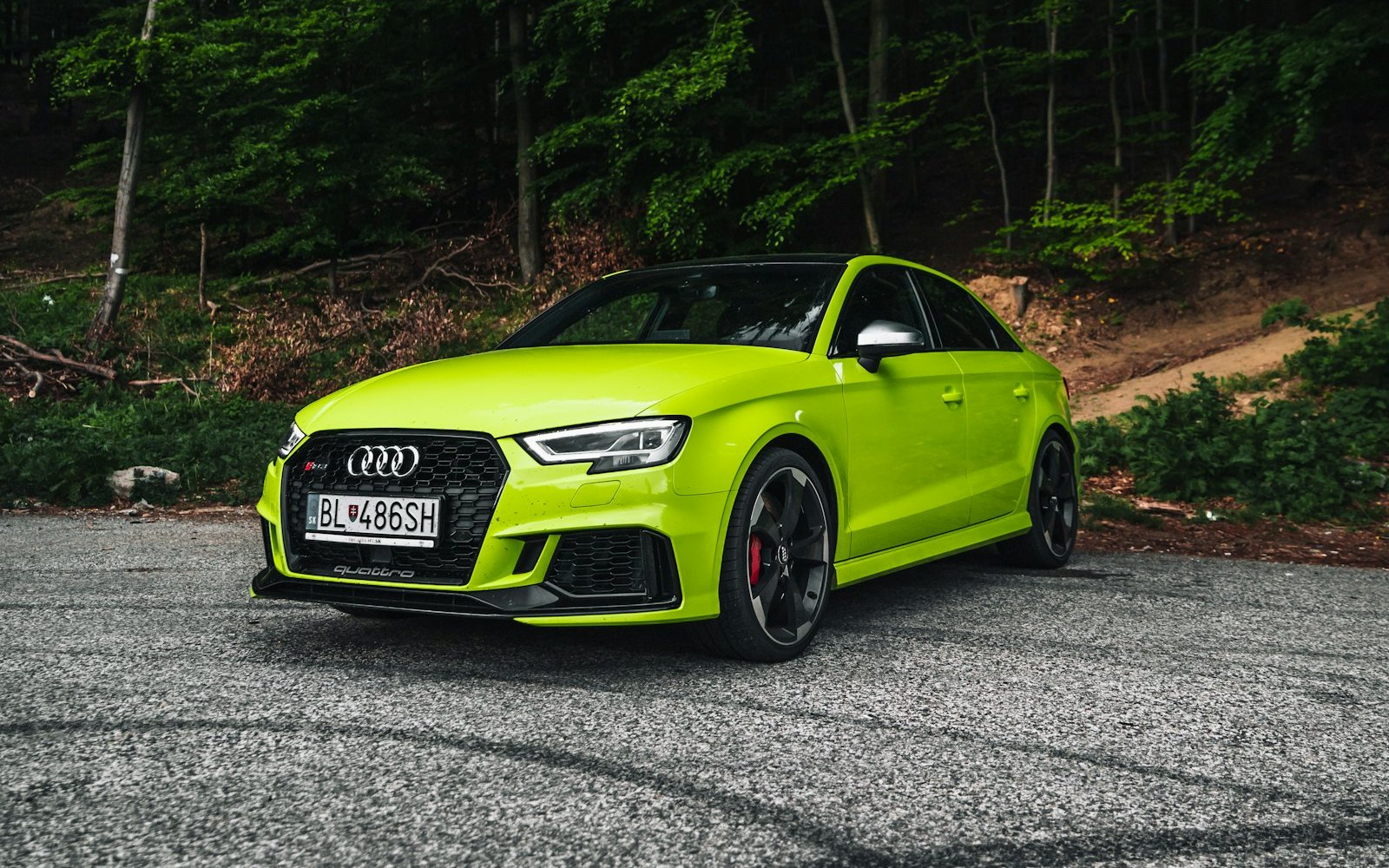
1. Identify your exact car
Tunes are written for a specific engine, engine computer and gearbox, not just a model name. Find your generation, engine code and gearbox type in the registration documents, the service book or the VIN, and match them to the right guide on this site.
Small differences matter:
- Same name, different engine. The Golf GTI Mk7 has the EA888 Gen 3 engine, the Mk8 the Gen 4. Tunes, parts and power figures differ between them.
- Same car, new computer. The 2025 facelift of the Audi RS3 8Y uses a newer engine computer (MG1CS164), so check that the tune lists it. Hyundai changed the Elantra N's computer in 2024, and a 2024-on car needs a bench flash or a spare computer.
2. Make sure the car is healthy first
A tune adds boost and load, so it will expose any existing problem. Before you flash anything, do a service, check the spark plugs and ignition coils, read the fault codes and fix any boost or vacuum leaks. Tuning a sick car only makes it worse.
Check for recalls too. On the Elantra N, Hyundai's recall 262 covers the fuel pump on 2022–23 cars built from 15 September 2021 to 23 November 2023. N75 already calls the stock pump a weak point on this car, so a pump with an open recall is not one to tune.
3. Choose the brand and the fuel
Pick a tune from an established company that supports your exact car, and choose the file for the fuel you can buy every day. A tune written for a higher octane than your local fuel will pull timing, or worse, knock.
On the Golf GTI Mk7, Unitronic's Stage 1 makes 297 hp on 95 RON and its Stage 1+ makes 310 hp on 98, a difference of 13 hp. On the Civic Type R FL5, Cobb's 91 map is for 95 RON and its 93 map for 98 RON, and the 98 map should never run on 95. US octane numbers are on a different scale: US 91 is roughly 95 RON and US 93 roughly 98 RON. If 98 is hard to find where you drive, use the 95 file (see 95 or 98 after a tune).
4. Decide: at home or at a shop
Many brands let you flash the car yourself through the OBD port with their own cable or app, such as UniCONNECT+, bootmod3 or MHD. That is convenient and cheaper, but you are responsible for choosing the right file and reading the logs. A shop costs more, but installs the tune, checks the car and knows what to look for.
Some cars need one more step first: an unlock. Newer engine computers are locked against new software, and the unlock can cost as much as the tune. On the RS3 8Y, APR charges $1,000 for its unlock on top of the $1,200 tune. On the FL5, the computer has to be mailed to Cobb or Hondata before either can flash it. On newer BMW G20 cars a bench unlock costs $215 by mail or $850–$1,500 for a FEMTO unlock (see what tuning costs). Add it to the budget before you compare tunes.
5. Keep a copy of the original software
Make sure you or the shop keep the factory file, and understand how to return to stock. You may need it before a dealer visit, a warranty claim or when you sell the car.
6. Flash, then log the first drives
After the flash, drive gently at first, then do a few full-throttle pulls in a safe place with data logging on. Look for knock or timing corrections, boost that matches the target, and sensible fuel trims. If something looks wrong, go back to stock and ask the tuner before you drive hard again.
What to look at in the log:
- Timing corrections. Small, occasional corrections can be normal. Large or repeated ones on every pull point to bad fuel, too much heat or a file that is too aggressive for your car.
- Boost against target. Boost that falls short suggests a leak. Boost that overshoots suggests a control problem.
- Intake air temperature. Note how much it rises between the first and the third pull. A big rise is heat soak, and the next part to buy is an intercooler (see do you need a bigger intercooler?).
If anything looks odd, send the log to the tuner or the shop that flashed the car.
7. Tune the gearbox
On automatic and DSG cars, a gearbox tune raises clutch clamping and sharpens shifts for the extra torque. On manual cars, use a torque-limited file if the clutch starts to slip.
The six-speed DQ250 DSG is the clearest case. VW rates it at 350 Nm, and most Stage 1 files run more, so the gearbox software is part of Stage 1 on cars like the Golf GTI Mk5 to Mk7. APR sells it for $399.96–$549.95. On the GTI Mk7 with a manual box, APR offers a low-torque file to protect the clutch. More in do you need a gearbox tune?
8. Adjust your maintenance
A tuned engine works harder. Shorten your oil-change interval, change spark plugs more often, and keep an eye on the clutch and cooling system. Most reliability problems on tuned cars come from skipped maintenance, not from the tune itself.
Many tuners ask for colder spark plugs with Stage 1. On the GTI Mk7 tuners recommend plugs one step colder, such as APR's HR9, to reduce misfires at higher boost.
9. Add parts one step at a time
Every time you add hardware such as an intake, intercooler or downpipe, check whether you need a different file for it. Change one thing at a time and log again, so you always know what made the difference.
On the GTI Mk7, a sensible order looks like this. Stage 1 software gives 290–337 hp from 210 hp stock. An intercooler ($540–$1,200) keeps power steady on hot days. A catalysed downpipe ($850–$880) with APR's Stage 2 file takes it to 334–351 hp. Log after each step.
Common mistakes
- Skipping the gearbox. A slipping DSG clutch costs more than the gearbox software would have.
- Forgetting the paperwork. Tell your insurer, and check what your country requires (see keeping a tuned car legal and insured).
Quick answers
- Can I tune my car at home? On many cars, yes, with the tuner's cable or app. Cars with a locked computer need an unlock first, often by mail.
- Can I go back to stock? With most flash tunes, yes, if the original file was saved. Plug-in boxes are simply unplugged (see plug-in box or flash tune).
Keep reading
All articlesNew guides by email
One short email when a new car guide goes live. No spam, unsubscribe any time. We'll send a confirmation link first (by Brevo); see our privacy policy.